


Strategic Geography and Energy Security Architecture
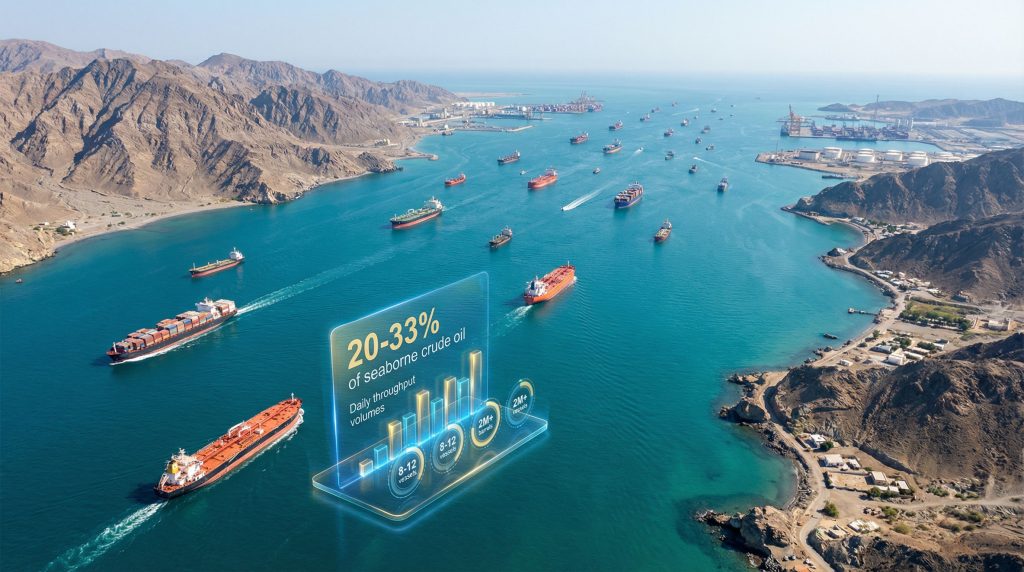
The Persian Gulf's maritime gateway functions as one of the most strategically sensitive passages in global energy infrastructure. This narrow waterway serves as the primary conduit through which approximately one-fifth of the world's seaborne oil and liquefied natural gas flows daily, connecting the resource-rich Persian Gulf with international markets across Asia, Europe, and beyond.
The chokepoint's strategic importance stems from its role as the sole maritime route for Persian Gulf energy exports. Major oil-producing nations including Saudi Arabia, the United Arab Emirates, Kuwait, and Iraq depend on this passage for the majority of their crude oil exports. Furthermore, Qatar, the world's second-largest LNG exporter accounting for 20% of global supply, must route all maritime gas shipments through these waters to reach consuming markets.
Economic Dependency Networks
Regional refineries across Asia demonstrate particular vulnerability to Strait of Hormuz tanker disruptions. Japanese refiners process significant volumes of Saudi Arabian and Kuwaiti crude, while South Korean facilities depend heavily on supplies from multiple Persian Gulf producers. Chinese refineries have increased their Middle Eastern crude intake substantially over the past decade, creating additional exposure to transit route disruptions.
European gas terminals face similar dependencies regarding LNG imports from Qatar and other regional producers. The infrastructure required to process and distribute these energy flows represents billions of dollars in fixed investments that cannot be easily redirected when supply routes become compromised.
Key Vulnerability Metrics:
- Daily crude oil throughput: 15-17 million barrels
- LNG transit volume: 20% of global seaborne supply
- Alternative route capacity limitations: 60-70% of normal throughput
- Regional refinery dependency ratios: 40-80% depending on location
Join thousands of readers who start here
Our best articles, sent straight to your inbox. You can unsubscribe anytime.
Crisis Response Mechanisms in Maritime Operations
When geopolitical tensions escalate in the Persian Gulf region, maritime operators implement sophisticated decision-making frameworks designed to balance commercial interests against operational safety. Recent examples demonstrate how quickly these mechanisms activate in response to perceived threats, even when official confirmations remain unavailable.
Shipowner Decision Protocols
Maritime companies employ multi-layered risk assessment processes that consider both immediate physical threats and longer-term commercial implications. These protocols typically prioritise crew safety and vessel protection over schedule maintenance, leading to rapid operational adjustments when security concerns emerge.
Communication networks within the shipping industry enable real-time information sharing about route conditions, security advisories, and operational modifications. Vessel tracking systems provide continuous monitoring capabilities, allowing shore-based operations centres to coordinate fleet responses during crisis periods. According to reports from Lloyd's List, trading houses suspended oil shipments through the strait while traffic flows continued for now.
The implementation of war clauses in shipping contracts provides legal frameworks for voyage cancellations during hostilities. These contractual provisions enable shipowners to suspend operations when predetermined conflict criteria are met, creating automatic triggers for supply chain disruptions.
Recent Operational Responses (February 2026):
| Vessel Type | Response Pattern | Cargo Impact | Timeline |
|---|---|---|---|
| VLCC Tankers | Route diversions and holding patterns | 2-3 million barrels per vessel | 2-5 days |
| LNG Carriers | Voyage suspensions | 20% of Qatar exports affected | 3-7 days |
| Suezmax Tankers | Mid-transit reversals | 1 million barrels typical capacity | 1-3 days |
Fleet Management During Disruptions
Shipping companies demonstrate remarkable coordination capabilities when implementing emergency protocols. The KHK Empress case study illustrates typical response patterns: the very large crude carrier executed a complete route change from Basra to New Mangalore, India, demonstrating the flexibility built into modern tanker operations.
Multiple vessels simultaneously halted operations at strategic positions, creating flotillas of waiting tankers both inside and outside the affected waterway. The Eagle Veracruz, carrying 2 million barrels of Saudi crude destined for China, stopped at the western approach, while the Front Beauly, transporting similar volumes of Iraqi and Emirati crude, adopted identical positioning strategies.
Eastern approaches witnessed comparable accumulation patterns, with vessels like the supertanker Mitake joining growing concentrations of idling tankers outside the Gulf of Oman. These positioning decisions reflect sophisticated logistical planning that enables rapid transit resumption once security conditions improve.
Financial Market Integration and Price Discovery
Energy commodity markets demonstrate sophisticated mechanisms for incorporating geopolitical risk into pricing structures, often responding to perceived threats before actual supply disruptions materialise. This dynamic creates volatility patterns that can exceed the physical impacts of transit interruptions, particularly during periods of potential oil price rally.
Risk Premium Calculations
Weekend trading activity following recent Persian Gulf tensions illustrated how financial markets price uncertainty. West Texas Intermediate crude futures reached $75.33 per barrel on retail platforms, representing approximately 12% gains from the previous Friday's close around $67.26. This pricing occurred despite closed official futures markets, demonstrating the urgency with which traders sought to hedge geopolitical exposure.
The magnitude of these price movements reflects multiple factors beyond immediate supply concerns. Market participants must account for potential escalation scenarios, alternative route economics, and strategic inventory adjustments across the global energy system. Moreover, concerns about tariff-induced inflation further complicate pricing dynamics.
"Initial price responses typically reflect risk perception rather than confirmed supply losses, creating opportunities for both overreaction and strategic positioning by sophisticated market participants."
Insurance Market Transmission Effects
War risk insurance provisions create direct links between geopolitical developments and operational economics. Freight rates have reached multi-year highs as vessel supply tightens due to war clause activations and route avoidance strategies. This mechanical relationship between security perceptions and transportation costs amplifies the economic impacts of perceived threats.
Hull and cargo insurance markets respond with premium adjustments that reflect changing risk assessments for specific geographic regions. These modifications can render certain trade routes economically unviable even when physical passage remains technically possible. In addition, oil market impacts from broader geopolitical tensions compound these challenges.
Alternative Infrastructure and Strategic Responses
Energy-producing nations maintain sophisticated contingency systems designed to minimise export disruptions during transit crises. These alternatives provide partial mitigation capabilities while highlighting the structural constraints that make complete chokepoint bypassing economically challenging.
Pipeline Bypass Options
Saudi Arabia's East-West pipeline system provides the most significant alternative export capacity, potentially handling up to 5 million barrels per day through Red Sea terminals. This infrastructure enables continued crude oil exports even during complete Strait of Hormuz closures, though at higher transportation costs and with capacity limitations compared to Persian Gulf terminals.
The United Arab Emirates operates similar pipeline infrastructure connecting Abu Dhabi oil fields to the Fujairah terminal on the Arabian Sea, bypassing the affected strait entirely. These systems demonstrate the strategic value of redundant export infrastructure in maintaining market access during crisis periods.
Alternative Route Capacity Analysis:
| Route Option | Maximum Daily Capacity | Additional Cost per Barrel | Implementation Timeline |
|---|---|---|---|
| Saudi East-West Pipeline | 5 million bpd | $2-4 premium | Immediate |
| UAE Fujairah Route | 1.5 million bpd | $3-6 premium | 24-48 hours |
| Overland Turkish Routes | 1 million bpd | $15-25 premium | 7-14 days |
Regional Storage and Distribution Networks
Strategic petroleum reserves in consuming nations provide temporary buffers against supply disruptions, though their effectiveness depends on disruption duration and coordination mechanisms between releasing authorities. Commercial storage facilities offer additional flexibility for managing supply timing mismatches.
Refinery input flexibility enables some mitigation through crude slate optimisation, allowing facilities to process alternative feedstocks when preferred supplies become unavailable or economically unattractive. This capability varies significantly between refineries based on their technical configurations and processing capabilities. However, investment market impacts can affect funding for such flexibility enhancements.
Long-term Strategic Infrastructure Evolution
Recurring chokepoint vulnerabilities drive structural changes in global energy infrastructure investment patterns. Market participants increasingly prioritise supply chain resilience over pure cost optimisation when making long-term capital allocation decisions.
Investment Response Patterns
Pipeline development projects gain enhanced economic justification during periods of heightened chokepoint risk. Projects that might appear marginally viable under normal conditions become strategically essential when alternative route premiums are factored into economic analyses.
Alternative energy infrastructure investments accelerate during extended periods of traditional energy supply uncertainty. Solar, wind, and other renewable energy projects benefit from reduced competition for capital when fossil fuel supply chains demonstrate vulnerability. Furthermore, the natural gas forecast influences investment decisions across the energy sector.
Regional refining capacity expansion receives increased support from governments seeking to reduce import dependency and enhance energy security. These investments create structural shifts in global refining patterns that persist beyond the resolution of immediate crisis triggers.
Technology and Monitoring Evolution
Advanced vessel tracking systems have become essential tools for real-time supply chain monitoring and risk assessment. Automatic Identification System (AIS) data enables continuous fleet position monitoring, providing early warning capabilities for developing disruptions.
Communication technologies facilitate rapid coordination between shipping operators, energy companies, and government authorities during crisis periods. These systems enable the coordinated responses observed during recent tensions, where multiple companies implemented similar protective measures within hours of initial threat indications.
"Modern chokepoint management relies increasingly on information systems and coordinated response protocols rather than purely physical infrastructure redundancy."
Enjoyed this article?
We publish high-impact stories like this a few times a week. No spam.
Risk Assessment Frameworks for Energy Stakeholders
Sophisticated energy market participants employ multi-scenario planning approaches that account for varying severities and durations of potential Strait of Hormuz tanker disruptions. These frameworks enable proactive positioning rather than reactive crisis management.
Probability-Weighted Scenario Planning
Scenario Categories:
• Brief Disruption (1-7 days): Limited physical impacts, primarily psychological market effects
• Extended Closure (1-4 weeks): Significant supply rerouting, strategic reserve utilisation
• Prolonged Crisis (1-6 months): Structural market adjustments, alternative infrastructure activation
• Permanent Reconfiguration: Long-term supply chain redesign, infrastructure investment acceleration
Each scenario category requires different response strategies and carries distinct economic implications for various market participants. Trading houses, refineries, shipping companies, and consuming nations face different optimal strategies depending on disruption characteristics.
Financial Hedging Strategies
Derivatives markets provide tools for managing price volatility associated with geopolitical risks, though basis risk and timing mismatches can limit hedging effectiveness. Options strategies enable asymmetric risk management that benefits from upside price movements while providing downside protection.
Physical storage strategies complement financial hedging by providing operational flexibility during supply disruptions. Companies with access to strategic storage facilities can optimise both commercial and security objectives through inventory management during crisis periods. Nevertheless, as Forbes reports, oil tankers reportedly avoided the Strait of Hormuz following air strikes, highlighting the immediate operational challenges faced by market participants.
Essential Risk Monitoring Indicators:
• Regional military activity escalation patterns
• Insurance market premium movements and coverage availability
• Vessel positioning anomalies and fleet concentration changes
• Energy futures volatility patterns and basis relationships
Understanding these complex interactions enables energy market participants to navigate chokepoint vulnerabilities while positioning for both crisis management and long-term strategic adaptation. The interconnected nature of global energy systems ensures that localised disruptions create worldwide implications, making comprehensive risk assessment essential for successful energy sector participation.
This analysis is for educational purposes only and should not be considered as investment advice. Energy market investments carry significant risks, and past performance does not guarantee future results.
Looking to Navigate Energy Market Volatility?
Discovery Alert's proprietary Discovery IQ model provides instant alerts on significant ASX mineral discoveries, including energy and commodity opportunities that could benefit from geopolitical developments like Strait of Hormuz disruptions. Explore Discovery Alert's historic success stories to understand how major discoveries have generated substantial returns, then begin your 14-day free trial to position yourself ahead of market-moving announcements in the energy and resources sectors.