- Details
-
Category: Marina Mercante
-
Published on Friday, 17 April 2015 05:04
-
Written by Administrator2
-
Hits: 2754
Poutikanga Whakahaere Kaipuke
Ship's masters are in charge of a ship, its crew and any passengers or cargo it is carrying, on the water and in port. On tugs or pilot boats they may guide or assist ships in and out of harbours or through difficult waterways.
Masters on small vessels usually earn
$28K-$70K
per year
Masters on large, foreign-going vessels usually earn
$125K-$180K
per year
Average
Chances of getting work as a ship’s master are average, due to declining job numbers but a shortage of people qualified to command large ships.
Usually required
Passed relevant ship's master qualifications
Met Maritime New Zealand's requirements
Useful subjects
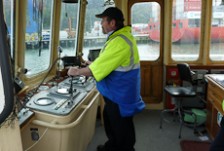
Paul Wilson operating a ferry
Pay
Pay for ship's masters varies depending on their skills and experience, and the type of vessel they work on.
- Masters on small vessels, such as launches, usually earn between minimum wage and $70,000 a year, and often work part time or seasonally.
- Tug masters usually earn between $60,000 and $90,000 a year.
- Harbour pilots usually earn between $100,000 and $130,000.
- Ship's masters qualified for foreign-going vessels usually earn between $125,000 and $180,000.
What you will do
Ship's masters:
- are responsible for passengers, cargo and the vessel's safety
- are responsible for planning and executing the ship's route
- ensure all maritime laws, rules and regulations are followed and records are kept correctly
- ensure maintenance and repairs are carried out
- oversee any emergency operatons
Ship's masters may also supervise cargo handling.
Tug masters and pilots may also:
- guide and assist ships in and out of harbours and other difficult waterways
- assist with hazard identification, fire fighting, pollution control and rescues.
Skills and knowledge
Ship's masters need to have:
- knowledge of the requirements for running and handling a ship
- a sound technical understanding of the ship and its equipment including radio and electronics equipment
- knowledge of tides, waters, coastlines, marine hazards and the weather, and how these vary depending on where their vessel is
- knowledge of relevant laws, requirements and safety procedures
- navigational skills
- knowledge of safety procedures and methods such as fire-fighting, rescue, and collision prevention.
Working conditions
Ship's masters:
- may work irregular hours or full-time shifts. They are permanently on call while at sea. A ship's master working for an international company usually works for three months at sea, followed by three months' leave.
- work on board ships, in port and at sea in all weather conditions
- visit a wide range of ports around the world and are often at sea for months at a time
- work in conditions which can be dangerous and may be unpleasant in rough seas.
What's the job really like?
Steve Clark - Ship's Master
Born for the sea – and still loves it
Steve Clark reckons he was born for the sea and has been skippering vessels for 30 years and he’s still learning.
"In the last couple of years I've put myself through extra training. It's really good and I've enjoyed it. I'm finishing my nautical master's course with the safety endorsements, which lets me operate anything up to 500 tonnes outside New Zealand."
Responsibilities grew with size of vessels
"I was lucky because I've always liked the sea and playing around with different boats; you are your own boss out here. I stuck with it because I enjoyed it, and went straight into tug and barge work. Since then I've moved onto the passenger ferries and freight boats."
Now transporting passengers, cargo and heavy freight
"I've been on just about all the boats in my 26 years here. We operate two catamarans, plus a large ferry that travels to Great Barrier Island. We've also got a barge that runs heavy freight, like trucks and trailers. We've even moved houses on it before."
Great crew makes all the difference
Steve captains a small crew who work together on whichever ship they are rostered to crew. "I'm very privileged because here on board I've got a very good crew that doesn't need a lot of supervision. They know their tasks and their job and they get on with it – which all helps make this job as good as it is."
Masters on small vessels usually earn
$28K-$70K
per year
Masters on large, foreign-going vessels usually earn
$125K-$180K
per year
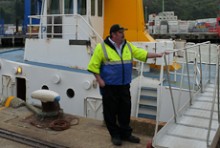
On small ships, ship's masters may be responsible for a wide range of jobs
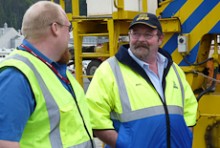
Ship's masters oversee all crew on their ship
Entry requirements
There are a number of routes to becoming a ship's master, but all require you to have relevant Maritime New Zealand-approved experience and qualifications.
In general, you must:
- have experience in ship's officer positions on a vessel that is above a defined size or weight
- have approved qualifications in first aid, radar, firefighting and survival
- pass eyesight and colour vision tests
- be able to prove you are a 'Fit and Proper Person' with no criminal convictions
- pass Maritime New Zealand exams.
In 2014 Maritime New Zealand will be replacing maritime qualifications with SeaCert qualifications. See the link below for more information.
Secondary education
NCEA Level 2 with English, maths and science is useful for entering this job, though Level 3 is preferred.
Additional requirements for specialist roles:
You may need experience on a particular vessel to be able to qualify as a ship's master for that type of ship.
Personal requirements
Ship's masters need to be mature, responsible, disciplined, adaptable and able to make good judgements.
"You have to be a really flexible person to deal with changes in shift work and the weather."
Paul Massie - Inshore Launchmaster
Useful experience
Useful experience for ship's masters includes:
- service in the Navy
- work as a deckhand
- any experience at sea or on ships.
Physical requirements
Ship's masters need to
- be reasonably fit and healthy, and able to pass relevant medical tests
- have a good level of stamina
- have good eyesight (with or without corrective lenses)
- have normal colour vision
Related courses
View information on courses in the course database
Find out more about training
- Competenz
-
This email address is being protected from spambots. You need JavaScript enabled to view it.
- Maritime NZ
- (04) 473 0111 -
This email address is being protected from spambots. You need JavaScript enabled to view it.
- www.maritimenz.govt.nz/
- NZ Merchant Service Guild
- (04) 382 9131 -
This email address is being protected from spambots. You need JavaScript enabled to view it.
- www.nzmsg.co.nz
years of training required
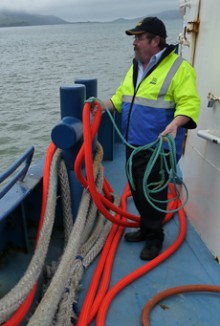
Ship's masters usually need many years of maritime experience before taking command of a vessel
What are the chances of getting a job?
Average
Chances of getting work as a ship’s master are average, due to declining job numbers but a shortage of people qualified to command large ships.
Due to a shortage of people with the relevant certificates and experience to command large ships, the role of ship's master appears on Immigration New Zealand's long-term skill shortage list, which means the Government is actively encouraging qualified ship's masters from overseas to work in New Zealand. However,
Opportunities vary depending on type of ship's master qualification you have
Opportunities are best for ship’s masters who are qualified to work on large ships. They are in demand for piloting ships into port and operating tug boats.
Demand for ships' masters qualified to work on smaller boats is lower, and people qualified in roles such as launch masters or inshore launch operators may find it more difficult to find work.
Ship's masters work for a variety of employers
Ship's masters can work for:
- international shipping companies
- New Zealand-based shipping companies
- authorities (as tug masters or harbour pilots, though some are employed by New Zealand shipping companies).
- for ferry and charter companies
- themselves (self-employed).
Current vacancies
Other vacancy websites
Progression and specialisations
Ship's masters can progress to more land based maritime roles, such as harbour pilot, or administrative or management roles in the maritime industry such as harbour master, marine manager, or chief executive of a port company.
Ship's masters may specialise in operating a particular size or type of vessel such as a petrol tanker, container ship, cruise ship, super yacht, fishing boat or passenger ferry.
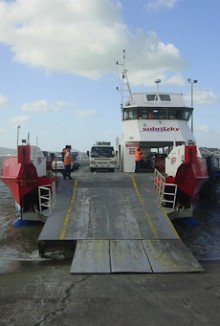
Ship's masters are in charge of a whole vessel and all its cargo


