Will China’s Fujian be first carrier to carry anti-torpedo system to beat Western subs?

- Details
- Category: Seguridad marítima
- Published on Tuesday, 14 July 2026 06:00
- Written by Administrator2
- Hits: 126
Defence magazine points to lightweight torpedo launcher in place of the 12-tube depth charge launchers on earlier Chinese carriers
https://www.scmp.com/news/china/military/article/
Why it matters that China’s advanced fighters can use all its carriers
PLA’s advanced carrier Fujian transits Taiwan Strait amid military drills
What is China’s aircraft carrier Liaoning testing – and why does it matter?
Opinion | China’s missile test is a signal. How non-nuclear states respond matters
What China’s carrier recruitment drive says about PLA Navy’s long-term ambitions
What does China’s J-16 jet ‘beast mode’ upgrade mean for regional air power?
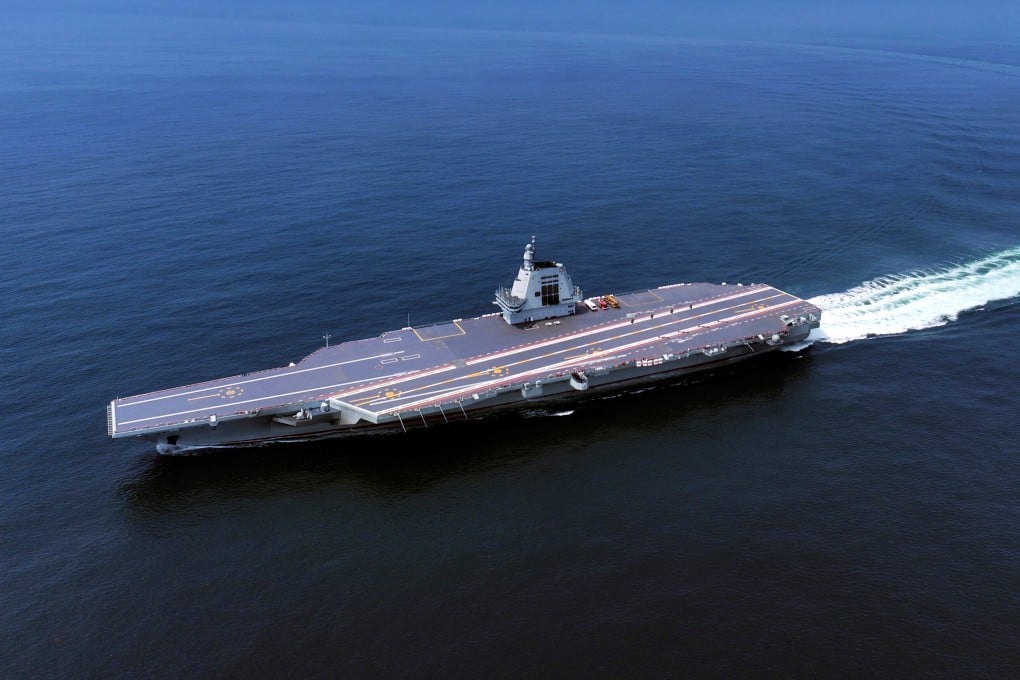
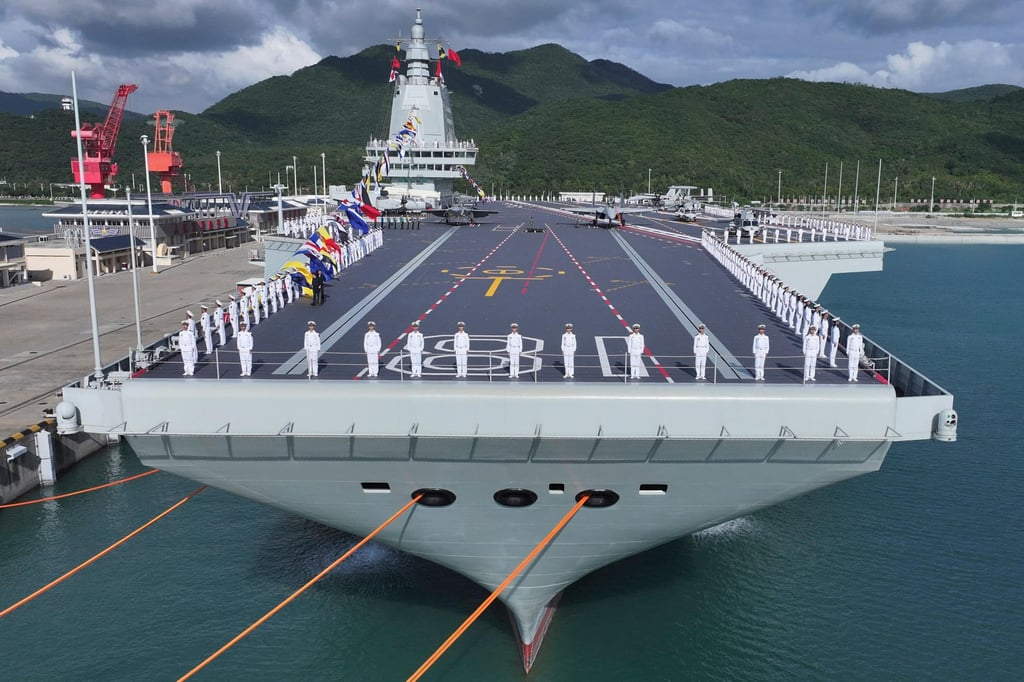
Commissioned in November, the Fujian is the PLA Navy’s third aircraft carrier and its first to be fully designed domestically.
“Torpedoes present a real and significant threat to PLA Navy aircraft carriers that must not be underestimated,” the article said, explaining that heavy wire-guided torpedoes launched from attack submarines could cause more damage to a warship than anti-ship missiles.
China demonstrated an earlier ATT system in 2016. The new ATT system on the Fujian should “reach a world-class level in detection accuracy, damage reliability and system integration”, the article said. It noted that the US Navy’s anti-torpedo torpedo defence system (ATTDS) project in the 2010s had failed and its new hard-kill programme was still under way.
The analysis said the Chinese ATT torpedo was likely to be powered by a combined propulsion of a small rocket booster to provide a high initial velocity, and a rare-earth permanent magnet synchronous direct-drive pump-jet thruster, which could deliver torque and acceleration far greater than those of US counterparts of the same size.
It asserted that when intercepting an incoming torpedo, this propulsion system could accelerate the People’s Liberation Army (PLA) ATT torpedo to speeds of 50 to 60 knots within 3 seconds, with precise power regulation and minimal noise to ensure effective operation of its own sonar.
The ATT is fitted with a broadband sonar array on its head, capable of distinguishing real targets from decoys from several thousand metres and precisely locating vulnerable areas on enemy torpedoes, such as the warhead, to guarantee destruction with a single hit.
Citing China’s extensive previous testing, the article said that the ATT used a high-speed, two-way wireless acoustic communication technology proven sufficient for complex military operations. It not only ensured a stealthy, reliable link with the carrier but also enabled networking among multiple interceptors.
To break the hull of modern heavy torpedoes, the ATT employs both directional shaped charge penetration – similar to high-explosive anti-tank munition – and high-energy overpressure water shock waves generated by close-range explosion.
Additionally, the system may incorporate ATTs with supercavitation technology similar to that used in some offensive torpedoes, enabling speeds of up to 200 knots.
The article said this extreme velocity was invaluable for countering close-range high-speed torpedoes, where the outcome of the engagement could be decided in seconds