Permission via agents and recommended routes: Greek shipowner sheds light on Hormuz transits

- Details
- Category: Navieras
- Published on Thursday, 02 April 2026 06:48
- Written by Administrator2
- Hits: 200


Register to read more articles.
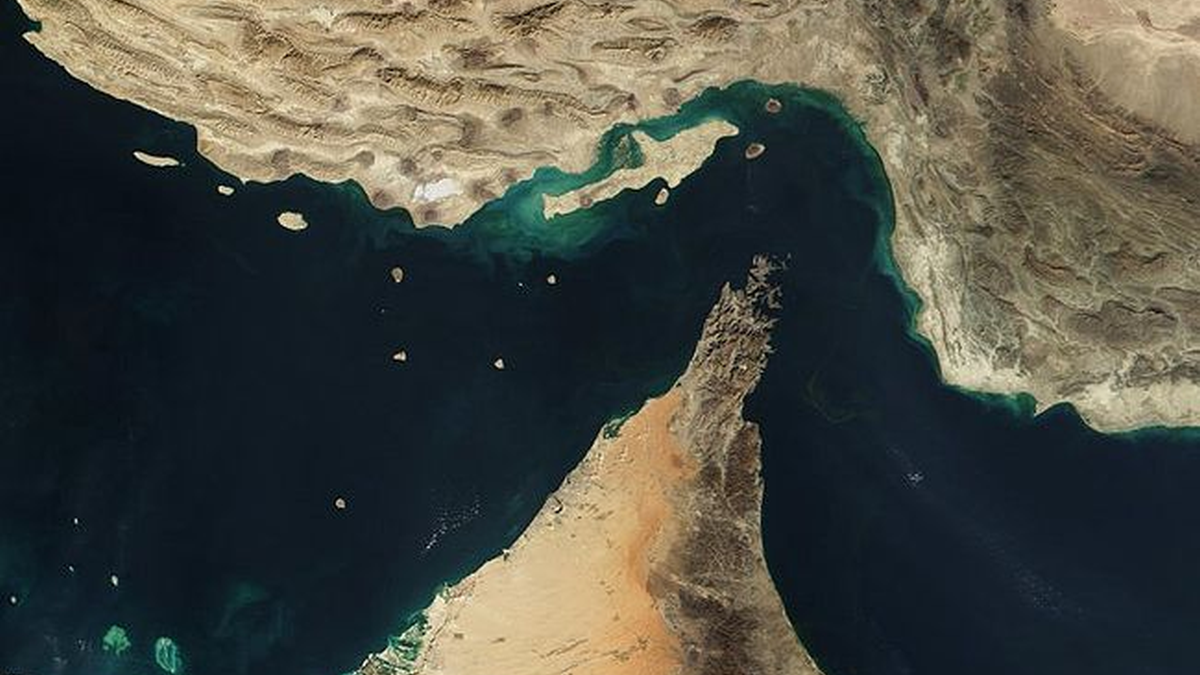
Shipping agents granting permission for transit outside the Strait of Hormuz via a “recommended course” have recently been observed in the case of bulk carriers exiting the passage amid highly constrained maritime traffic


A senior executive at a major Greek shipping company, whose bulk carrier recently transited the Strait, spoke to Riviera on condition of anonymity regarding the procedure.
The executive explained that the vessel had been stuck in the Gulf before the outbreak of the conflict, scheduled to discharge grain in Iran. The company then waited some weeks after the start of hostilities to assess how traffic conditions would develop.
Following discharge, the vessel was given clearance to proceed with an eastbound transit through the Strait. “Bulk carriers discharging cargo in Iran are typically given the go-ahead to leave the area,” the executive noted.
MarineTraffic reported on 31 March that another bulk carrier listed “Santos food for Iran” as its AIS destination while transiting the Strait last week. “Similar AIS destination listings have been observed across multiple vessels in recent days, often before or after discharging grain cargoes at Bandar Imam Khomeini,” the report said.
According to the Greek shipping executive, once cargo operations were completed, the company contacted local shipping agents, who in turn liaised with “relevant authorities” to obtain permission for departure.
“There is no written approval; the individual agents handle the process and inform us accordingly,” the source added.
The executive was categorical in stating that the company did not pay any tolls to Iran. “There was no transaction with any party – only communication with agents.”
These same agents provide shipping companies with a “recommended course,” the source explained. In some cases, including the one described, bulk carriers have exited the Strait outside the International Maritime Organization traffic separation scheme, navigating closer to the Iranian coast.
Under the established scheme, outbound vessels are expected to follow routes passing closer to the Omani coastline.
MarineTraffic reported on 24 March that some vessel movements through the Strait appeared to occur outside the traffic separation scheme, near Qeshm Island, “raising questions about route control, risk exposure, and whether this reflects a genuine resumption of activity or a more constrained traffic pattern.”
Maritime security advisers also noted in mid-March that some outbound bulk carriers made short deviations via the Larak-Qeshm Channel, suggesting a verification process whereby Iranian authorities confirm vessel details before permitting passage.
However, in cases such as the Greek-owned bulk carrier referenced here, this verification process appears to have taken place before departure.
Data from Kpler shows that eight bulk carriers transited the Strait over the past week, the majority of which are owned by Greek shipping companies.
That said, uncertainty remains over how the situation will evolve. Iran has warned of a potential toll scheme for transits through the Strait. Riviera reported on 31 March that such a scheme may currently be taking legislative shape in Iran. Semi-official Iranian news agency Fars reported on its Telegram channel that Mujtaba Zarei, a representative to Iran’s parliament for the capital Tehran, had announced that the National Security and Foreign Policy Commission in Iran has approved a plan to impose tolls on vessels transiting the Strait of Hormuz.
Reports of hefty tolls have surfaced occasionally during the course of the US-Israeli and Iranian conflict, and a Malaysian government official was quoted as saying that “no toll is being imposed on Malaysian vessels,” and that the country’s tankers would transit the Strait without restriction.