


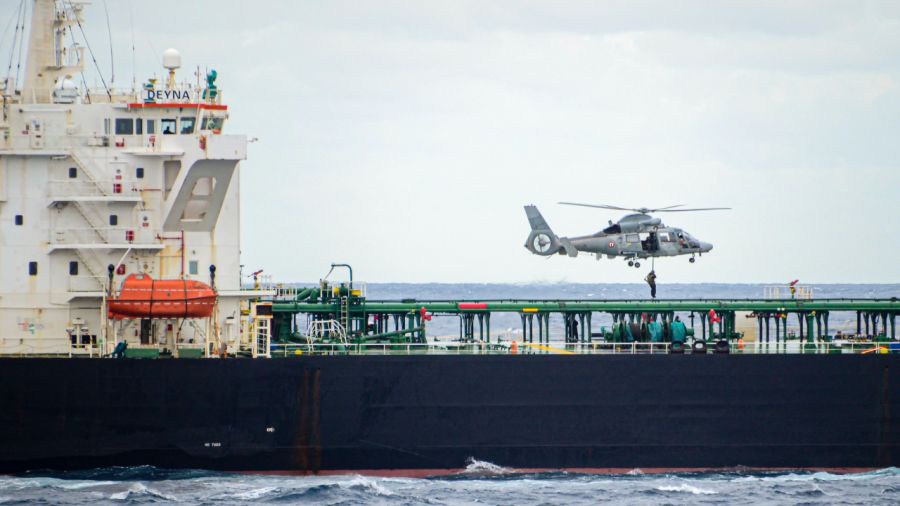
The boarding by the French Navy of a vessel belonging to the Russian ‘shadow fleet’ on Friday has once again shone the spotlight on a group of ships that play a vital role in Moscow’s war machine.
Income from energy exports is critical for Russia’s funding of its war in Ukraine and the shadow fleet has proved its worth in helping Moscow bring in the cash despite EU attempts to choke off this money supply through the imposition of successive sanctions packages.
But just what is the ‘shadow fleet’ and how it operates is often overlooked.

What is a shadow fleet?
The terms ‘shadow fleet,’ ‘dark fleet’ and ‘ghost fleet’ regularly appear in news stories about Russian energy and came to the fore with the dramatic boarding of vessels in January by US special forces.
Since then, French, Belgian and Swedish armed units have seized further Russian tankers in a bid to stem supplies.
A distinction needs to be drawn, however, between two separate fleets. A global shadow fleet exists that carries energy products, often subject to international sanctions, for producers including chiefly Russia, Venezuela and Iran.
This fleet, consisting of mostly aging, often poorly maintained, under- or un-insured vessels sailing under dubious and frequently dangerous practices, numbers an estimated 1,500 vessels. It is involved in a worldwide black market in energy products worth hundreds of billions of dollars a year.
Within this global stock of smuggling vessels is a separate, proprietary Russian shadow fleet effectively established under a presidential decree by Vladimir Putin in 2022.
The decree forbade Russian oil exporters from selling at below a price cap imposed by the EU. It thereby disqualified Western-insured mainstream vessels from the trade, forcing sellers to use a fleet of around 400 ships bought hurriedly by Moscow for around $15 billion, which is now believed to number more than 600 ships.
Both fleets are characterized by opaque ownership and the practice of sailing under the flags of countries with lax maritime regulation, such as Sierra Leone or Cameroon.
Flagged but stateless
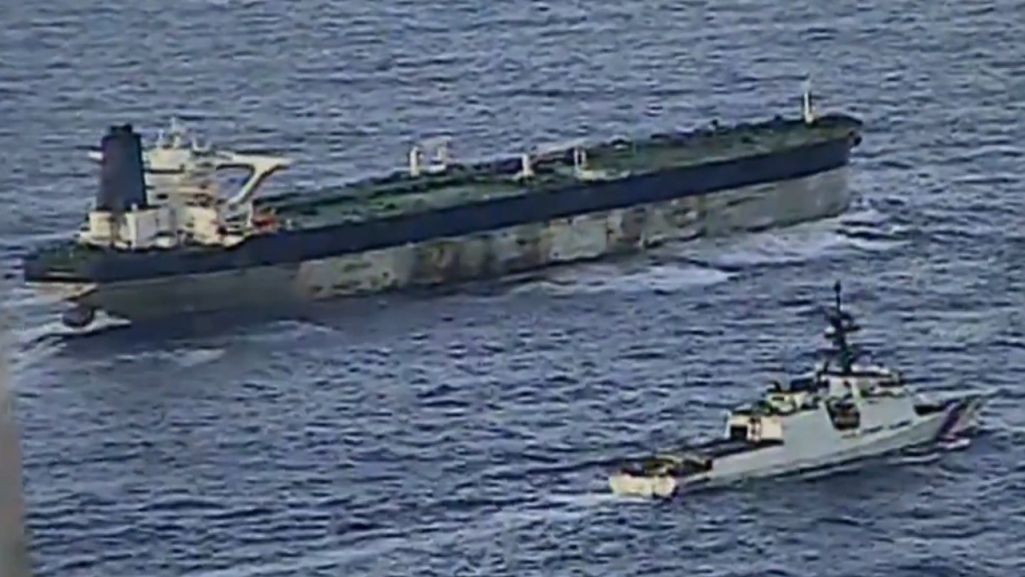
The tankers boarded by US forces in January were not part of this Russian proprietary fleet but were targeted for circumventing sanctions on Venezuelan oil. The most high-profile seizure, however, concerned a Russian-flagged vessel, the Marinera.
The Marinera changed its name from the Bella-1 and re-flagged in mid-voyage, a practice that would render such a ship stateless under new moves by some European states and leave them legally liable to seizure by force in international waters.
In January, 14 European countries flanking the Baltic and North seas, including the UK, Germany, France and Poland, issued a joint statement that essentially served time on Russia’s coverts export practices.
The signatories highlighted a clause in international maritime law that removes ‘state protection’ in the event of reflagging for convenience.
They also drew attention to hazardous practices of unregulated shipping including spoofing—sending out false GPS signals to hide a ship’s true location—and falsifications in the Automatic Identification System (AIS) to disguise a vessel’s true identity.
Such practices undermine maritime safety and increase the risk of accidents, the signatories wrote.
France seizes another Russian shadow fleet tanker in the Mediterranean
Military options
Subsequent to January’s statement and an accompanying letter to the international maritime community, a UK-led group of 10 European countries—dubbed the Joint Expeditionary Force—met on the sideline of the Munich Security Conference.
On the agenda was a “more proactive” approach to countering Russia’s covert exports, Estonian Defense Minister Hanno Pevkur told Bloomberg after the talks.
“The message is that the countries who give flags to the shadow fleet vessels need to know that there are measures that can be taken by other countries,” he said.
The UK defense minister, John Heally, was joined at the meeting by the head of the country’s military, Air Chief Marshal Sir Richard Knighton, who presented attendees with possible scenarios including joint seizure operations, according to unnamed insiders cited by Bloomberg.
However, Estonian Foreign Minister Margus Tsahkna told the news agency that some members remain cautious due to a fear of escalation.
Analysts point out that an armed interventions involving Russian shadow vessels would likely prompt Moscow to provide naval escorts for its tankers, potentially leading to direct military confrontation between Russia and a NATO country.
Nonetheless, the first quarter of 2026 has seen the seizure of a number of Russian ships—by Belgium, France and Sweden—marking a shift from legal sanctions to active maritime enforcement.
The operations were seen as the start of a reinvigorated push to stem the illicit oil trade. That push floundered with the outbreak of hostilities in the Gulf.
A key argument against cracking down on the shadow trade in oil has been the need to maintain market stability. That stability disappeared with the effective closure of the Strait of Hormuz and subsequent choking-off of global supply.
The White House has insisted its war on Iran will be short-lived, leading to hopes that energy markets will regain equilibrium sooner rather than later.
But with as many as 23 shadow fleet vessels identified in the Baltic Sea and English Channel in January alone according to Lloyds List Intelligence, a leading authority on maritime affairs, many see further armed interventions as a question or when rather than if.
The sanctions gambit
While some countries mull military options, the European Union is honing its legal measures. The bloc failed to adopt its much-awaited 20th package of sanctions on Moscow by February’s four-year anniversary of the Ukraine war.
The package has been held up by vetoes by the pro-Moscow leaders of Hungary and Slovakia, but hopes are high that when the measures come, they will bite.
Moving away from its price-cap strategy of targeting value, the 27-nation bloc is readying steps to tackle volume.
Reports say that as well as adding a further 43 ships to the almost 600 already sanctioned, the new package forbids Western companies from providing maritime services to shipping carrying Russian crude.
A blanket ban on insurance and reinsurance from Western providers, most crucially in London, as well as on maintenance and brokering services, “will see the remaining 20% of Russian crude oil transits on tankers owned or insured by EU entities, moved on to the shadow fleet,” according to Lloyds List.
Such a move would put the whole of Russia’s illicit oil trade in the crosshairs of a European military emboldened by earlier successes.
It could also open up a whole new chapter in Europe’s deadliest conflict since World War II.