US seizes fifth oil tanker linked to Venezuela, officials say

- Details
- Category: General
- Published on Friday, 09 January 2026 20:15
- Written by Administrator2
- Hits: 385
BBC
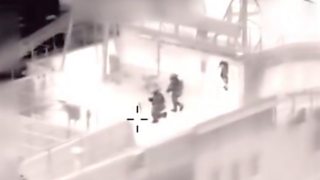
US forces have seized another tanker in the Caribbean Sea, officials say, as the Trump administration continues its efforts to control exports of Venezuelan oil.
The tanker, the Olina, is on multiple countries' sanctions lists and the fifth vessel to be seized by the US in recent weeks.
The US is using the seizures to pressure Venezuela's interim government and remove the so-called dark fleet of tankers from service. Officials say this fleet consists of more than 1,000 vessels that transport sanctioned and illicit oil.
"Once again, our joint interagency forces sent a clear message this morning: 'there is no safe haven for criminals,'" said the US military's Southern Command on Friday.
The vessel reportedly left Venezuelan waters late on Sunday, after the US seized President Nicolás Maduro in an early morning raid.
Officials said Friday's operation was carried out before dawn by Marines and sailors in coordination with the Department of Homeland Security, and that it was seized after it "departed Venezuela attempting to evade US forces".
Homeland Security Secretary Kristi Noem wrote on X that it was "another 'ghost fleet' tanker ship suspected of carrying embargoed oil".
Noem also shared a video appearing to show troops dropping onto a ship from a helicopter, and described the operation as "safe" and "effective".
Maritime risk company Vanguard Tech said the vessel was attempting to break through the US naval blockade in the Caribbean. It had been sailing under a false flag registered to Timor-Leste, according to the International Maritime Organization.
Vanguard Tech added that the vessel's location tracker was last active 52 days ago, northeast of Curacao, and that "the seizure follows a prolonged pursuit of tankers linked to sanctioned Venezuelan oil shipments in the region".
The US had sanctioned the Olina last January, then named Minerva M, accusing it of helping finance Russia's war in Ukraine by moving Russian oil to foreign markets.
Earlier this week, the US said it seized two other tankers linked to Venezuelan oil exports in "back-to-back" operations in the North Atlantic and Caribbean.
One of them was the Russian-flagged Marinera seized with the help of the UK Royal Navy, which gave logistical support by air and sea.
The Marinera is allegedly part of shadow fleet carrying oil for Venezuela, Russia and Iran, breaking US sanctions. US officials said that Marinera was falsely flying the flag of Guyana last month, which made it stateless.
US authorities alleged the second tanker - the M/T Sophia - was "conducting illicit activities".
Experts have told BBC Verify that under UN international maritime law, authorities can board a stateless vessel.
President Donald Trump says Venezuela - which has the world's largest proven oil reserves - "will be turning over" up to 50 million barrels of oil worth some $2.8bn (£2.1bn) to the US.
The oil, according to Secretary of State Marco Rubio, would be sold "in the marketplace at market rates" and that the US would control how the proceeds were dispersed "in a way that benefits the Venezuelan people".
Meanwhile on Friday, US diplomats visited the Venezuelan capital, Caracas, to assess the possibility of re-opening an embassy in the Latin American country.
Diplomatic ties between the US and Venezuela were severed by Maduro in 2019. The new Venezuelan authorities have said they're engaged in exploratory talks on restoring relations.
------------------------------

 Transporting russian crude oil/oil products in violation of other restrictions Associated with sanctioned entities
 Sao Tome and Principe
Tipo de barco : petrolero

https://www.argusmedia.com/en/news-
Actualizaciones para incluir el destino del petrolero incautado.
Estados Unidos confiscó el petrolero Aframax Olina , sancionado , el viernes por la mañana mientras navegaba por el Caribe transportando crudo venezolano, lo que marca la quinta incautación confirmada en los últimos meses.
El Olina , de 113.782 toneladas de peso muerto (TPM), con bandera de Timor Oriental según la base de datos de la OMI, fue interceptado en el mar Caribe el 9 de enero, según informó el Comando Sur de Estados Unidos. "En una acción realizada antes del amanecer, infantes de marina y marineros de la Fuerza de Tarea Conjunta Southern Spear, en coordinación con el Departamento de Seguridad Nacional, zarparon del USS Gerald R. Ford y interceptaron al petrolero Olina en el mar Caribe sin incidentes", indicó el comando.
El Olina fue sancionado por EE. UU. con el nombre de Minerva M en octubre de 2025, por la UE en mayo de 2025 y por el Reino Unido en diciembre de 2024 por transportar petróleo ruso. El propietario registrado del buque es Tantye Peur, Hong Kong, según la base de datos de la OMI.
El petrolero hizo escala en Rusia por última vez en septiembre de 2024, cuando cargó productos contaminantes desde Tamán, según datos de Kpler. En 2025, el buque realizó principalmente viajes a Venezuela, según Kpler.
Esta es la quinta incautación confirmada de un petrolero por parte de Estados Unidos en los últimos meses. La Guardia Costera estadounidense incautó dos buques en diciembre después de que el presidente Donald Trump declarara un bloqueo petrolero parcial a Venezuela, dirigido contra los petroleros amparados por las sanciones estadounidenses. Posteriormente, incautó el Marinera y el M Sophia el 7 de enero.
De regreso a Venezuela
El Olina será devuelto a Venezuela, anunció el presidente estadounidense Donald Trump en una publicación en redes sociales el viernes. El petróleo del barco se venderá eventualmente como parte de un acuerdo que, según Trump, Estados Unidos alcanzó con Venezuela para vender hasta 50 millones de barriles de crudo a compradores estadounidenses.
El regreso del Olina a Venezuela marca un cambio con respecto a las prácticas previas del gobierno, que consistían en devolver los buques incautados a puertos estadounidenses. Los dos primeros buques incautados por las fuerzas estadounidenses, los grandes cargueros de crudo Centuries y Skipper , han estado estacionados frente a la costa de Houston, Texas, desde su regreso a Estados Unidos, según datos de seguimiento de buques de Kpler.
La carga a bordo de esos buques puede ser difícil de descargar debido a las implicaciones comerciales de realizar transacciones con barcos que aún están sujetos a sanciones estadounidenses, según un corredor marítimo.